
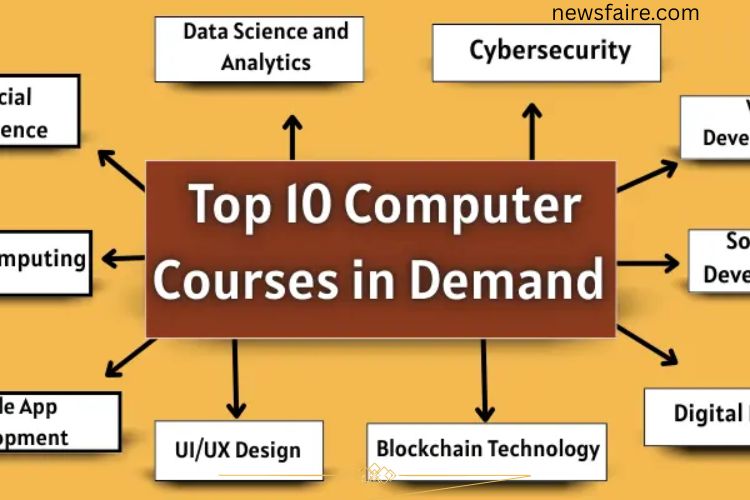
Choosing the right computer course can be overwhelming with so many online and offline options. Many beginners waste months learning skills that aren’t in demand. To help you focus your efforts, we’ve compiled a guide to the top 10 computer courses that are highly sought after by employers worldwide. These courses equip you with the skills needed for high-paying jobs and exciting career opportunities.
By choosing the right course, you can master in-demand skills, save time, and confidently step into a thriving tech career.
Read More: Mastering Computer Troubleshooting: The Ultimate Guide to Fixing Frustrating Tech Problems Fast
Data Science and Analytics
Data Science helps businesses make smart decisions by analyzing and interpreting data. It combines statistics, programming, and domain knowledge and is crucial in industries like finance, healthcare, and marketing.
Tools & Languages: Python, R, SQL, Excel, Tableau, Power BI
Job Roles:
- Data Analyst: Interprets data and generates reports
- Data Scientist: Predicts trends and builds models
- Business Analyst: Uses data to improve strategies
- Machine Learning Engineer: Designs AI algorithms
- Data Engineer: Manages data pipelines
Artificial Intelligence (AI) & Machine Learning
AI enables machines to simulate human intelligence, while Machine Learning lets systems learn from data. These skills automate tasks and improve decision-making across multiple industries.
Tools & Languages: Python, R, TensorFlow, PyTorch, SQL, Jupyter Notebook
Job Roles:
- Machine Learning Engineer: Builds ML models
- AI Developer: Creates AI applications
- Data Scientist: Analyzes trends with ML
- Deep Learning Engineer: Works on neural networks
- Business Intelligence Developer: Uses AI insights
Cybersecurity
Cybersecurity safeguards systems, networks, and data from attacks, maintaining privacy and trust online. It’s vital for businesses, governments, and individuals.
Tools & Languages: Python, Wireshark, Nmap, Kali Linux, SQL
Job Roles:
- Ethical Hacker: Detects and fixes vulnerabilities
- Security Analyst: Monitors system security
- Penetration Tester: Tests system weaknesses
- Security Consultant: Advises on protective measures
- Network Security Engineer: Designs secure networks
Cloud Computing
Cloud Computing allows businesses to store, access, and manage data online. It reduces hardware costs and supports remote collaboration.
Tools & Platforms: AWS, Microsoft Azure, Google Cloud, Docker, Kubernetes, Linux
Job Roles:
- Cloud Engineer: Manages cloud infrastructure
- Cloud Architect: Designs cloud strategies
- DevOps Engineer: Oversees deployment and operations
- Cloud Consultant: Advises businesses on solutions
- Site Reliability Engineer (SRE): Maintains cloud performance
Web Development
Web Development focuses on building interactive websites and applications. It blends design with coding to create user-friendly platforms.
Tools & Languages: HTML, CSS, JavaScript, React, Angular, Node.js, Python
Job Roles:
- Front-End Developer: Creates the user interface
- Back-End Developer: Manages databases and servers
- Full-Stack Developer: Handles front-end and back-end
- Web Designer: Focuses on visuals and layout
- UI/UX Developer: Enhances user experience
Mobile App Development
Mobile App Development builds apps for Android and iOS devices, helping businesses engage users on the go.
Tools & Languages: Java, Kotlin, Swift, Flutter, React Native, Android Studio, Xcode
Job Roles:
- Android Developer: Builds Android apps
- iOS Developer: Creates iPhone/iPad apps
- Cross-Platform Developer: Builds apps for multiple platforms
- App Designer: Focuses on UI/UX
- Mobile QA Tester: Ensures app functionality
Software Development
Software Development involves creating programs that automate tasks, solve problems, and support businesses.
Tools & Languages: Java, Python, C#, C++, Git/GitHub
Job Roles:
- Software Developer: Builds applications
- Software Engineer: Designs complex systems
- Backend Developer: Manages server-side functions
- Full-Stack Developer: Covers front-end and back-end
- QA Tester: Identifies bugs and issues
UI/UX Design
UI/UX Design enhances the usability and appeal of websites and apps, improving user satisfaction.
Tools & Languages: Figma, Adobe XD, Sketch, InVision, basic HTML/CSS
Job Roles:
- UI Designer: Designs visual elements
- UX Designer: Optimizes user experience
- Product Designer: Combines UI and UX
- Interaction Designer: Focuses on user interactions
- UX Researcher: Studies user behavior
Blockchain Technology
Blockchain secures and tracks digital transactions across multiple systems, enabling decentralized applications.
Tools & Languages: Solidity, Ethereum, Hyperledger, Python, JavaScript, Truffle, Ganache
Job Roles:
- Blockchain Developer: Builds blockchain solutions
- Smart Contract Developer: Creates automated contracts
- Blockchain Consultant: Advises businesses on adoption
- Crypto Analyst: Analyzes cryptocurrency trends
- Blockchain Architect: Designs frameworks and networks
Digital Marketing with Tech Focus
Digital Marketing uses online tools and analytics to grow businesses, combining technology with marketing strategies.
Tools & Platforms: Google Analytics, Ahrefs, SEMrush, social media platforms, Mailchimp, Google Ads
Job Roles:
- Digital Marketer: Plans online campaigns
- SEO Specialist: Optimizes website visibility
- Social Media Manager: Manages social platforms
- Content Marketer: Creates engaging content
- PPC Specialist: Handles paid advertising
Additional High-Value Computer Courses
Other courses can also boost your career:
- Networking (CCNA, CompTIA)
- Internet of Things (IoT)
- Big Data Engineering
- Game Development
- Robotics Process Automation (RPA)
- DevOps Engineering
- Database Management Systems (DBMS)
- Computer Graphics & Multimedia
These courses expand your technical skills and open more career opportunities.
How to Choose the Right Computer Course
Selecting the right course is key to career success. Consider:
- Career Goal: Choose courses aligned with your job aspirations
- Course Content: Ensure it teaches in-demand skills
- Tools & Languages: Learn the industry-standard tools
- Job Opportunities: Pick courses with high-demand roles
- Certification: Verify the course is recognized
- Time & Budget: Match course duration and cost with your availability
- Hands-On Practice: Ensure practical experience is included
A well-chosen course provides both theory and practical skills, preparing you to work confidently in real-world projects.
Frequently Asked Questions:
What are the best computer courses for beginners?
For beginners, courses in Data Science, Web Development, AI & Machine Learning, Cybersecurity, and Cloud Computing offer high-demand skills that lead to rewarding careers.
How long does it take to complete these courses?
Most beginner courses can be completed in 3–6 months, while advanced certifications may take 6–12 months, depending on your pace and practice.
Can I start a tech career without prior experience?
Yes. Many high-demand courses are beginner-friendly and provide hands-on projects that help you gain practical skills for entry-level jobs.
Are online courses as effective as classroom courses?
Online courses can be just as effective if they include practical exercises, real-world projects, and recognized certification from reputable providers.
Which skills are most valued by employers in 2026?
Employers value skills in programming (Python, Java, SQL), data analysis, cybersecurity, cloud computing, AI, web/mobile development, and digital marketing with tech focus.
How do I choose the right computer course for my career?
Consider your career goals, course content, tools & languages taught, practical experience, certification, and job opportunities before enrolling.
Can learning these courses lead to high-paying jobs?
Yes. Courses like AI & Machine Learning, Data Science, Cloud Computing, and Cybersecurity are in high demand and often lead to well-paying and long-term careers.
Conclusion
Choosing the right computer course can transform your career and open doors to high-paying, in-demand jobs. From Data Science and AI to Web Development, Cybersecurity, and Cloud Computing, these top courses equip beginners with the skills employers are actively seeking. By focusing on practical experience, mastering industry-standard tools, and selecting courses aligned with your career goals, you can confidently step into the tech world and build a successful, future-proof career. Investing your time wisely today ensures a strong foundation for growth, innovation, and long-term opportunities in the rapidly evolving technology landscape.