
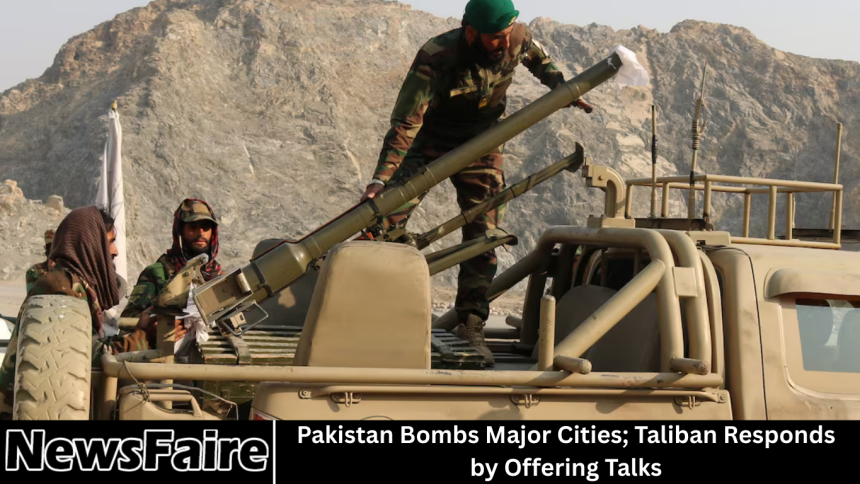
Pakistan and Afghanistan share a long border that has historically been difficult to manage. The region is characterized by mountainous terrain, tribal communities, and a complex political history that has influenced relations between the two nations for decades.
The border, commonly referred to as the Durand Line, has often been a point of contention. Afghanistan historically questioned its legitimacy, while Pakistan considers it the official international boundary. This disagreement has contributed to periodic tensions.
After the Taliban returned to power in Afghanistan in 2021, many observers expected relations between Pakistan and Afghanistan to improve. Pakistan had maintained contact with the Taliban for years and hoped the new Afghan government would help curb militant groups targeting Pakistan.
More Read: Bill Clinton Testifies He Was Unaware of Jeffrey Epstein’s Illegal Activities
Historical Background of Pakistan–Afghanistan Relations
However, relations gradually deteriorated. Pakistan began accusing the Afghan Taliban government of allowing militant groups—particularly the Tehreek-e-Taliban Pakistan (TTP)—to operate from Afghan territory.
These militants allegedly launched attacks across the border into Pakistan, targeting military personnel, police, and civilians.
Afghanistan’s Taliban government rejected these accusations, stating that it does not allow any group to use Afghan territory against other countries. The disagreement created a growing diplomatic rift between the two neighbors.
Rising Security Concerns in Pakistan
Pakistan has faced increasing security challenges in recent years, especially in regions close to the Afghan border. Militancy has surged in areas such as Khyber Pakhtunkhwa and parts of Balochistan. The Tehreek-e-Taliban Pakistan has been one of the most significant threats.
The group has carried out numerous attacks on Pakistani security forces and government facilities. Pakistani officials claim that many of these fighters operate from bases located inside Afghanistan.
As attacks increased, Pakistan repeatedly urged the Taliban government to take stronger action against militants using Afghan territory. Diplomatic efforts included meetings between officials, intelligence sharing, and warnings about possible consequences if militant activities continued.
When these efforts failed to produce visible results, Pakistan decided to take direct military action. The airstrikes were presented by Pakistani authorities as a necessary response to ongoing threats to national security.
Pakistan’s Airstrikes on Afghan Territory
Pakistan conducted airstrikes in several locations within Afghanistan that it believed were being used by militant groups. According to Pakistani officials, the operation was carefully planned and based on intelligence identifying militant camps and hideouts.
The strikes reportedly targeted areas in eastern and southeastern Afghanistan. Pakistan stated that these locations were being used by militants responsible for organizing attacks across the border.
From Islamabad’s perspective, the operation was an act of self-defense. Officials argued that when militant groups operate from neighboring countries and threaten national security, a country has the right to act to protect its citizens.
However, the Afghan Taliban government strongly disagreed with this justification. Afghan officials claimed the strikes hit residential areas and caused civilian casualties. They accused Pakistan of violating Afghan sovereignty and escalating the conflict unnecessarily.
The differing narratives from both sides quickly intensified tensions and raised fears of broader military confrontation.
Taliban Condemns the Strikes but Offers Talks
The Taliban leadership responded to Pakistan’s airstrikes with a mixture of condemnation and diplomacy. Afghan officials issued strong statements criticizing Pakistan’s actions and calling them unacceptable violations of international norms.
At the same time, the Taliban government signaled that it remained open to negotiations with Pakistan. Taliban representatives emphasized that dialogue and cooperation were better solutions than continued military confrontation.
This approach reflects a balancing act by the Taliban. On one hand, the government must demonstrate that it will defend Afghanistan’s sovereignty. On the other hand, it wants to avoid a prolonged conflict with Pakistan, which remains an important regional neighbor.
By offering talks, the Taliban is attempting to reduce tensions while still expressing opposition to the airstrikes.
Border Clashes and Escalation
Following the airstrikes, clashes reportedly broke out along parts of the Pakistan-Afghanistan border. Security forces from both sides exchanged fire in some areas, increasing concerns that the situation could spiral into a larger conflict.
These clashes caused panic among communities living near the border. Residents in several villages were forced to leave their homes due to fear of continued fighting.
The mountainous border region is already difficult to control, and any escalation can quickly create humanitarian and security challenges. Local populations often bear the brunt of such conflicts, facing displacement, property damage, and economic disruption.
Both governments accused each other of provoking the violence. Pakistan argued that militants supported by Afghan territory were responsible for instability, while the Taliban insisted that Pakistan’s airstrikes triggered the escalation.
Humanitarian Consequences
One of the most troubling aspects of the conflict has been its impact on civilians. Reports from border regions indicate that thousands of people have been displaced due to the fighting. Families have fled their homes seeking safety in nearby towns or refugee camps.
Many have lost access to basic necessities such as food, shelter, and medical care. Humanitarian organizations have expressed concern about the worsening conditions in these areas. Afghanistan already faces severe economic challenges and humanitarian crises.
And additional conflict only increases the pressure on local communities. Children and elderly residents are particularly vulnerable during such crises. Schools may close, healthcare services become limited, and local markets struggle to function.
For many civilians living near the border, the conflict represents another chapter in decades of instability.
Regional and Global Reactions
The international community has closely monitored the situation. Several countries and organizations have called for restraint and encouraged both Pakistan and Afghanistan to resolve their differences through dialogue. Diplomats from various nations have emphasized the importance of avoiding further escalation.
Regional stability is a major concern because tensions between Pakistan and Afghanistan can affect broader geopolitical dynamics in South Asia. Some observers fear that prolonged conflict could create opportunities for extremist groups to exploit instability in the region.
Others worry about the humanitarian consequences if fighting continues. International pressure for peaceful negotiations may play a role in encouraging both sides to pursue diplomatic solutions.
The Role of Militant Groups
Militant groups remain at the center of the dispute between Pakistan and Afghanistan. The Tehreek-e-Taliban Pakistan is often mentioned as the main source of tension. The group aims to challenge the Pakistani government and has carried out attacks on military bases, police stations, and civilian locations.
Pakistan claims that these militants use Afghan territory as a base for planning and launching attacks. Afghan authorities deny providing support but acknowledge that controlling militant groups can be challenging. The existence of such groups complicates relations between the two countries.
Even when governments attempt to cooperate, militant activity can quickly derail diplomatic efforts. Finding a sustainable solution to this issue will likely be essential for improving relations between Pakistan and Afghanistan.
Prospects for Negotiations
Despite the current tensions, the Taliban’s willingness to hold talks suggests that diplomacy may still be possible.
Negotiations between Pakistan and Afghanistan could focus on several key issues:
- Preventing militant groups from using either country’s territory to launch attacks
- Strengthening border security cooperation
- Creating mechanisms for intelligence sharing
- Establishing communication channels to avoid misunderstandings during military operations
If successful, such agreements could reduce tensions and improve stability along the border. However, negotiations may also face challenges. Distrust between the two governments remains strong, and resolving deep-rooted security concerns will not be easy.
Still, dialogue offers a better alternative than prolonged military confrontation.
Implications for Regional Stability
The relationship between Pakistan and Afghanistan has significant implications for regional security. Both countries play important roles in South Asian geopolitics, and tensions between them can influence neighboring regions.
Continued conflict could disrupt trade routes, worsen refugee crises, and create opportunities for extremist groups to expand their influence. On the other hand, successful negotiations could strengthen cooperation against terrorism and contribute to greater regional stability.
For many observers, the current crisis represents a critical test of whether diplomacy can overcome longstanding tensions between the two nations.
Frequently Asked Question
Why did Pakistan conduct airstrikes in Afghanistan?
Pakistan says the strikes targeted militant groups responsible for attacks inside its territory, particularly those believed to be operating from Afghan soil.
How did the Taliban respond to the airstrikes?
The Taliban condemned the strikes as violations of Afghanistan’s sovereignty but also stated that they are open to diplomatic talks with Pakistan.
Which militant group is central to the conflict?
The Tehreek-e-Taliban Pakistan is often cited as the main group causing tensions because of its attacks inside Pakistan.
Were civilians affected by the strikes?
Reports suggest that civilian areas were impacted and that some casualties occurred, although both sides present different accounts.
Has the conflict caused displacement?
Yes, thousands of people living near the border have reportedly been displaced due to the fighting and fear of further escalation.
What are the chances of peace negotiations?
The Taliban’s willingness to hold talks indicates that diplomacy remains possible, though significant challenges remain.
Why is this conflict important for the region?
Tensions between Pakistan and Afghanistan can affect regional security, trade, and humanitarian conditions across South Asia.
Conclusion
The recent airstrikes conducted by Pakistan in Afghanistan and the Taliban’s subsequent offer for talks mark a serious moment in relations between the two countries. While the conflict has raised fears of escalation, it has also opened the door for renewed diplomatic engagement. Pakistan maintains that its actions were necessary to defend against militant threats. The Taliban, meanwhile, insists that Afghanistan’s sovereignty must be respected while also signaling readiness for dialogue.