
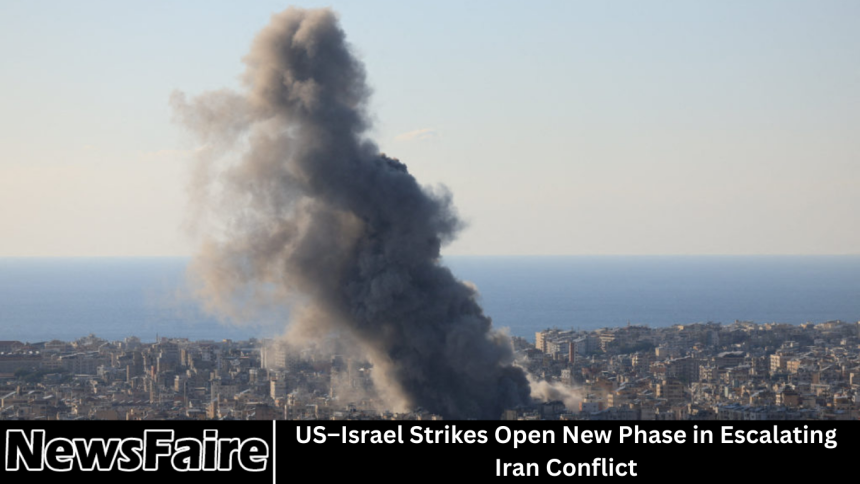
The Middle East has once again become the center of global geopolitical tension as joint military strikes by the United States and Israel against Iran mark a dramatic escalation in an already fragile regional situation. The coordinated attacks signal a significant shift from years of indirect confrontations.
For decades, tensions among these nations have simmered beneath the surface. However, recent developments suggest that the region may be entering a new era defined by open military confrontation, strategic retaliation, and global political repercussions.
The strikes carried out by the United States and Israel targeted key Iranian military installations, missile development facilities, and strategic infrastructure. These operations were presented as preventive measures aimed at reducing potential threats posed by Iran’s expanding military capabilities.
More Read: FBI Search Triggers Leave for LAUSD Superintendent Alberto Carvalho
Historical Background of the Iran–Israel Rivalry
The current conflict cannot be understood without examining the deep historical tensions between Iran and Israel. Their rivalry dates back to the late 20th century, particularly after the Iranian Revolution of 1979.
Before the revolution, Iran and Israel maintained relatively stable relations. However, when Iran’s new leadership came to power, it adopted a strong anti-Israel stance and positioned itself as a supporter of Palestinian resistance movements.
Since then, Iran has supported several groups in the Middle East that oppose Israel. These include organizations operating in Lebanon, Syria, and the Gaza Strip. Israel has frequently accused Iran of providing funding, weapons, and training to these groups.
In response, Israel has conducted numerous covert operations aimed at weakening Iran’s military influence in the region. These actions have included cyber operations, targeted strikes on Iranian assets in Syria, and alleged sabotage of Iranian nuclear facilities.
Although these confrontations rarely escalated into full-scale warfare, they contributed to an atmosphere of constant tension and suspicion.
Rising Tensions Leading to the Strikes
In recent years, tensions between Iran, Israel, and the United States have intensified significantly. Several factors contributed to the deterioration of relations.
One of the primary concerns has been Iran’s nuclear program. Western nations have long suspected that Iran may seek to develop nuclear weapons, although Tehran insists that its nuclear activities are intended for peaceful purposes such as energy production.
Negotiations aimed at limiting Iran’s nuclear program have repeatedly broken down, leading to sanctions and diplomatic confrontations. At the same time, Iran has expanded its missile capabilities and strengthened its regional alliances. Israel views these developments as a direct threat to its national security.
The United States, which maintains close strategic ties with Israel, has also expressed concern about Iran’s growing influence in the Middle East. Against this backdrop, the recent strikes represent a dramatic escalation in an already tense relationship.
The Strategic Objectives of the US–Israel Operation
The joint strikes were reportedly designed to achieve several strategic goals.
- First, the operation aimed to weaken Iran’s military infrastructure. By targeting missile production facilities, command centers, and weapons storage sites, the attacking forces hoped to limit Iran’s ability to carry out large-scale retaliatory attacks.
- Second, the strikes were intended to send a strong message of deterrence. By demonstrating their willingness to use force, the United States and Israel sought to signal that they would not tolerate actions they perceive as threats to regional stability.
- Third, the operation aimed to disrupt Iran’s military coordination with allied groups throughout the Middle East.
Military analysts believe that the strikes were carefully planned using advanced intelligence gathering, satellite surveillance, and precision-guided weapons. Despite these strategic objectives, the operation has also triggered significant backlash and heightened fears of further escalation.
Iran’s Response and Retaliatory Actions
Iran responded swiftly and forcefully to the strikes. Shortly after the attacks, Iranian officials condemned the operation as an act of aggression and vowed that retaliation would be unavoidable.
Iran launched a series of missile and drone attacks targeting strategic sites associated with Israeli and U.S. interests. These attacks demonstrated Iran’s ability to project power across the region despite suffering damage to some of its infrastructure.
In addition to direct military responses, Iran has reportedly increased its support for allied groups operating in neighboring countries. These groups have conducted attacks against military installations and strategic targets linked to Israel and the United States.
Iranian leaders have also warned that continued aggression could lead to wider disruptions, including threats to international shipping routes.
Expansion of the Conflict Across the Region
One of the most concerning aspects of the current situation is the potential for the conflict to spread across multiple countries. The Middle East contains a complex network of alliances and rivalries. Many armed groups and governments are connected through political, religious, and strategic relationships.
If these actors become directly involved, the conflict could evolve into a broader regional war.
Several potential flashpoints exist:
- Lebanon could become a major battlefield if armed groups there increase their attacks on Israel.
- Syria already hosts a variety of military forces and militias aligned with different regional powers.
- Iraq contains multiple armed factions that maintain close ties with Iran.
- Gulf states hosting U.S. military bases could also become targets of retaliatory attacks.
Because of these interconnected dynamics, even limited strikes can quickly trigger wider confrontations.
Global Economic Implications
Beyond the immediate military consequences, the conflict also has major economic implications for the global community. The Middle East plays a crucial role in the world’s energy supply. Many of the world’s largest oil reserves are located in the region.
Any conflict that threatens oil production or transportation routes can cause energy prices to rise sharply. One particularly sensitive location is the Strait of Hormuz, a narrow waterway through which a significant portion of the world’s oil shipments pass.
If tensions escalate and shipping traffic becomes disrupted, global markets could experience severe instability. Higher energy prices would affect industries worldwide, increasing transportation costs, manufacturing expenses, and consumer prices.
Financial markets often react strongly to geopolitical crises, and investors closely monitor developments in the region.
Humanitarian Impact of the Conflict
While geopolitical analysis often focuses on strategy and power dynamics, the human cost of conflict should not be overlooked. Military strikes and retaliatory attacks can lead to civilian casualties, displacement, and widespread destruction.
Cities caught in the crossfire may experience damaged infrastructure, including hospitals, power grids, and transportation networks. Families may be forced to leave their homes to escape violence, creating refugee crises that strain neighboring countries.
Humanitarian organizations often struggle to provide aid during active conflicts due to security risks and logistical challenges. The longer the conflict continues, the greater the suffering experienced by civilians on all sides.
The Role of Cyber Warfare
Modern conflicts are not fought only on traditional battlefields. Cyber warfare has become an increasingly important element of international conflict. Both Iran and Israel possess advanced cyber capabilities. Over the years, they have been involved in several cyber operations targeting each other’s infrastructure.
Cyber attacks can disrupt financial systems, communication networks, transportation systems, and energy infrastructure. Unlike conventional military attacks, cyber operations can be difficult to trace and may occur without immediate public visibility.
As the conflict evolves, cyber warfare may play a larger role in shaping its outcome.
Diplomatic Efforts and International Reactions
The international community has reacted with concern to the escalating conflict. Many governments have called for restraint and urged all parties to return to diplomatic negotiations. International organizations have emphasized the need to prevent further violence and protect civilians.
Some countries support the actions taken by the United States and Israel, arguing that they are necessary for regional security. Others criticize the strikes as destabilizing actions that risk triggering a wider war.
Diplomats are working behind the scenes to encourage dialogue, though progress remains uncertain.
Possible Future Scenarios
Several potential scenarios could unfold in the coming months.
- The first possibility is continued escalation. If both sides continue launching attacks, the conflict could expand into a prolonged regional war involving multiple countries.
- The second scenario involves limited confrontation followed by negotiations. In this case, both sides might eventually seek diplomatic solutions after demonstrating military strength.
- A third possibility is the emergence of indirect conflict through proxy forces rather than direct military engagement.
Each scenario carries different risks and consequences for regional and global stability.
The Importance of Diplomacy
History shows that even the most intense conflicts can eventually be resolved through diplomacy. Negotiations, mediation, and international pressure often play key roles in preventing wars from spiraling out of control.
Although trust between Iran, Israel, and the United States remains extremely low, diplomatic channels may still offer opportunities for de-escalation. Peace efforts would likely involve complex negotiations addressing security concerns, military capabilities, and regional influence.
Such discussions require patience, compromise, and cooperation from multiple international actors.
Frequently Asked Question
Why did the United States and Israel launch strikes against Iran?
The strikes were reportedly aimed at weakening Iran’s military capabilities and preventing potential threats related to missile development and regional influence.
How did Iran respond to the attacks?
Iran responded with missile and drone strikes targeting locations associated with U.S. and Israeli interests and increased support for allied groups in the region.
Could the conflict spread to other countries?
Yes. Due to the complex alliances in the Middle East, there is a risk that neighboring countries and allied groups could become involved.
Why is the Strait of Hormuz important?
The Strait of Hormuz is a critical shipping route for global oil supplies. Any disruption there could significantly affect global energy markets.
What role does cyber warfare play in this conflict?
Cyber warfare allows countries to target infrastructure, financial systems, and communication networks without traditional military attacks.
How does this conflict affect the global economy?
Rising tensions in the Middle East can lead to higher oil prices, financial market volatility, and disruptions to international trade.
Is there a possibility of diplomatic resolution?
Yes. Despite the tensions, diplomatic negotiations remain a possible path toward reducing hostilities and preventing a broader war.
Conclusion
The recent strikes by the United States and Israel against Iran represent a critical turning point in Middle Eastern geopolitics. What began as targeted military operations has evolved into a dangerous confrontation with far-reaching consequences. The conflict threatens regional stability, global energy markets, and the safety of millions of civilians.