
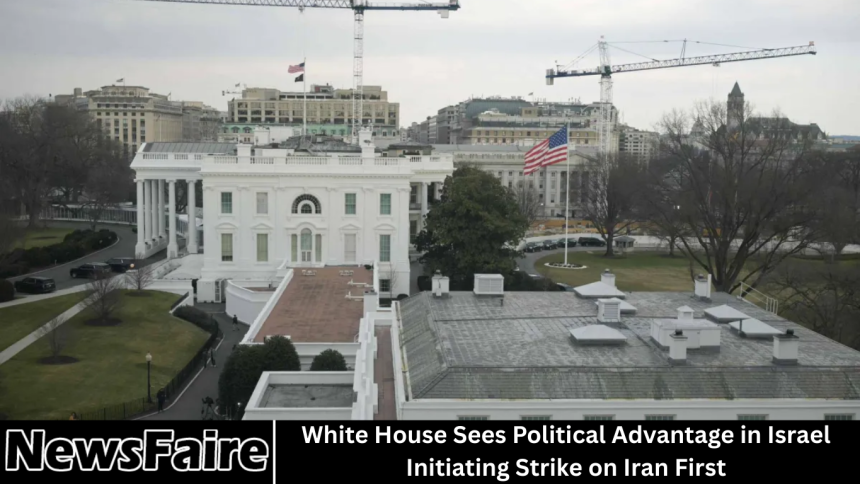
Geopolitical tensions in the Middle East have once again intensified, drawing global attention to the fragile relationship between United States, Israel, and Iran. At the center of this evolving situation is a controversial belief reportedly held by some officials within the White House.
That it may be politically advantageous if Israel were to launch a strike against Iran before the United States becomes directly involved. This perspective reflects a complex blend of military strategy, political calculation, and public perception. Rather than focusing solely on battlefield outcomes.
Policymakers are also considering how the sequence of events could shape domestic support, international legitimacy, and long-term strategic positioning. In this comprehensive article, we will explore the origins of this thinking, its potential benefits and risks, and what it could mean for global stability.
More Read: US–Israel Strikes Open New Phase in Escalating Iran Conflict
Historical Context: A Longstanding Rivalry
U.S. and Israel: A Strategic Partnership
The alliance between the United States and Israel is one of the most enduring in modern geopolitics. Since Israel’s establishment in 1948, the U.S. has provided:
- Military assistance
- Intelligence cooperation
- Diplomatic backing
This relationship is rooted in shared strategic interests, democratic values, and mutual security concerns.
Iran as a Regional Power
Iran, by contrast, has positioned itself as a key challenger to both U.S. and Israeli influence in the Middle East. Since the 1979 Iranian Revolution, relations between Washington and Tehran have been marked by hostility.
Key points of tension include:
- Iran’s nuclear ambitions
- Its missile development programs
- Support for regional proxy groups
Israel views Iran as an existential threat, while the U.S. considers it a destabilizing force in the region.
The Political Logic Behind “Israel First”
Strategic Framing of Conflict
The idea that Israel should strike first is less about military dependence and more about political optics. If Israel initiates action:
- Iran is likely to respond
- The conflict escalates visibly
- The U.S. can justify involvement as a response
This sequence allows American leadership to frame military action as defensive rather than aggressive.
Domestic Political Benefits
In the United States, public support for war is often influenced by how a conflict begins. Historically:
- Wars perceived as defensive gain more support
- Preemptive wars face greater scrutiny
- Casualties without clear justification lead to backlash
By entering a conflict after an ally is attacked—or after retaliation occurs—the administration can build a stronger narrative for intervention.
War Fatigue and Public Opinion
The Legacy of Past Conflicts
American public opinion has been shaped by prolonged engagements in:
- Iraq
- Afghanistan
- These wars led to:
- High financial costs
- Significant loss of life
- Uncertain outcomes
As a result, many Americans are wary of new military interventions.
The Importance of Narrative
If Iran retaliates following an Israeli strike:
- The U.S. can present itself as protecting allies
- The narrative shifts to defense and deterrence
- Political resistance may decrease
This makes the “Israel first” approach more appealing from a domestic standpoint.
Military Considerations
Potential Advantages
From a military perspective, an Israeli first strike could:
- Disrupt Iranian capabilities early
- Provide real-time intelligence on Iran’s response
- Allow the U.S. to prepare a calculated entry
Israel has a highly advanced military and has conducted similar preemptive operations in the past.
Major Risks
However, the risks are substantial:
- Rapid escalation into full-scale war
- Attacks on U.S. bases in the region
- Civilian casualties and infrastructure damage
Iran possesses significant missile capabilities and regional influence, making any conflict potentially widespread.
Israel’s Strategic Position
Independent Military Doctrine
Israel has historically maintained the right to act independently when it perceives threats to its survival. Its leadership has repeatedly emphasized that it will not allow Iran to develop nuclear weapons.
Current Regional Pressures
Israel is already managing tensions on multiple fronts, including:
- Northern borders with Lebanon
- Ongoing concerns in Gaza
- Iranian presence in Syria
Launching a direct strike on Iran would represent a major escalation.
Iran’s Likely Response
Direct Military Action
Iran has demonstrated its ability to respond forcefully through:
- Ballistic missile strikes
- Drone attacks
- Naval operations
- Proxy Warfare
Iran also maintains influence through allied groups across the region. These groups could:
- Target U.S. interests
- Attack Israeli cities
- Disrupt regional stability
- Cyber and Economic Warfare
In addition to traditional military responses, Iran could engage in:
- Cyberattacks on infrastructure
- Disruption of global trade routes
- Pressure on energy markets
Global Consequences
Impact on Energy Markets
The Middle East plays a critical role in global oil supply. A conflict involving Iran could:
- Disrupt shipping routes like the Strait of Hormuz
- Cause oil prices to spike
- Trigger global economic instability
- International Alliances
Countries across Europe and Asia would be forced to respond diplomatically or militarily. Alliances could be tested, and divisions may emerge over how to handle the crisis.
Risk of Broader War
A localized conflict could quickly expand, drawing in multiple nations and creating a wider regional war.
Ethical and Legal Considerations
Preemptive Strategy Concerns
Encouraging an ally to strike first raises serious ethical questions:
- Is it a form of indirect aggression?
- Does it shift responsibility unfairly?
International Law
Under international law:
- Defensive actions are generally justified
- Preemptive strikes are controversial
The legality of such a strategy would likely be debated globally.
Political Risks for the United States
Short-Term Gains vs Long-Term Costs
While the strategy may offer immediate political advantages, it also carries long-term risks:
- Damage to global reputation
- Increased anti-American sentiment
- Strained diplomatic relationships
- Domestic Backlash
If the conflict escalates or leads to heavy casualties, public support could quickly erode.
Possible Scenarios
Limited Conflict
Israel strikes, Iran responds, and the U.S. provides limited support without full-scale involvement.
Regional War
The conflict spreads across multiple countries, involving proxies and allies on both sides.
Diplomatic De-escalation
International pressure leads to negotiations and a reduction in hostilities.
The Role of Diplomacy
Despite rising tensions, diplomatic efforts remain crucial. Potential avenues include:
- Nuclear negotiations
- Regional security agreements
- Backchannel communications
Avoiding war would require cooperation from all parties involved.
Frequently Asked Question
Why would the U.S. prefer Israel to strike Iran first?
Because it allows the U.S. to frame its involvement as a response, which is more politically acceptable domestically and internationally.
Is Israel capable of striking Iran on its own?
Yes, Israel has advanced military capabilities, though such an operation would be complex and risky.
How might Iran retaliate?
Iran could respond with missile attacks, proxy warfare, cyberattacks, and disruptions to global trade routes.
What are the biggest risks of this strategy?
The main risks include regional war, global economic instability, and loss of life.
How does public opinion influence U.S. decisions?
Public support is crucial; Americans are generally more supportive of defensive actions than preemptive wars.
Could this lead to a larger global conflict?
Yes, escalation could draw in multiple countries and expand beyond the Middle East.
Are there alternatives to military action?
Yes, diplomacy, negotiations, and international cooperation remain viable options to reduce tensions.
Conclusion
The idea that it may be politically advantageous for Israel to strike Iran first highlights the complex interplay between strategy and perception in modern geopolitics. While such a move could provide the United States with a more favorable narrative for entering a conflict, it also introduces significant risks. From military escalation to global economic disruption, the consequences of such a strategy could be far-reaching.